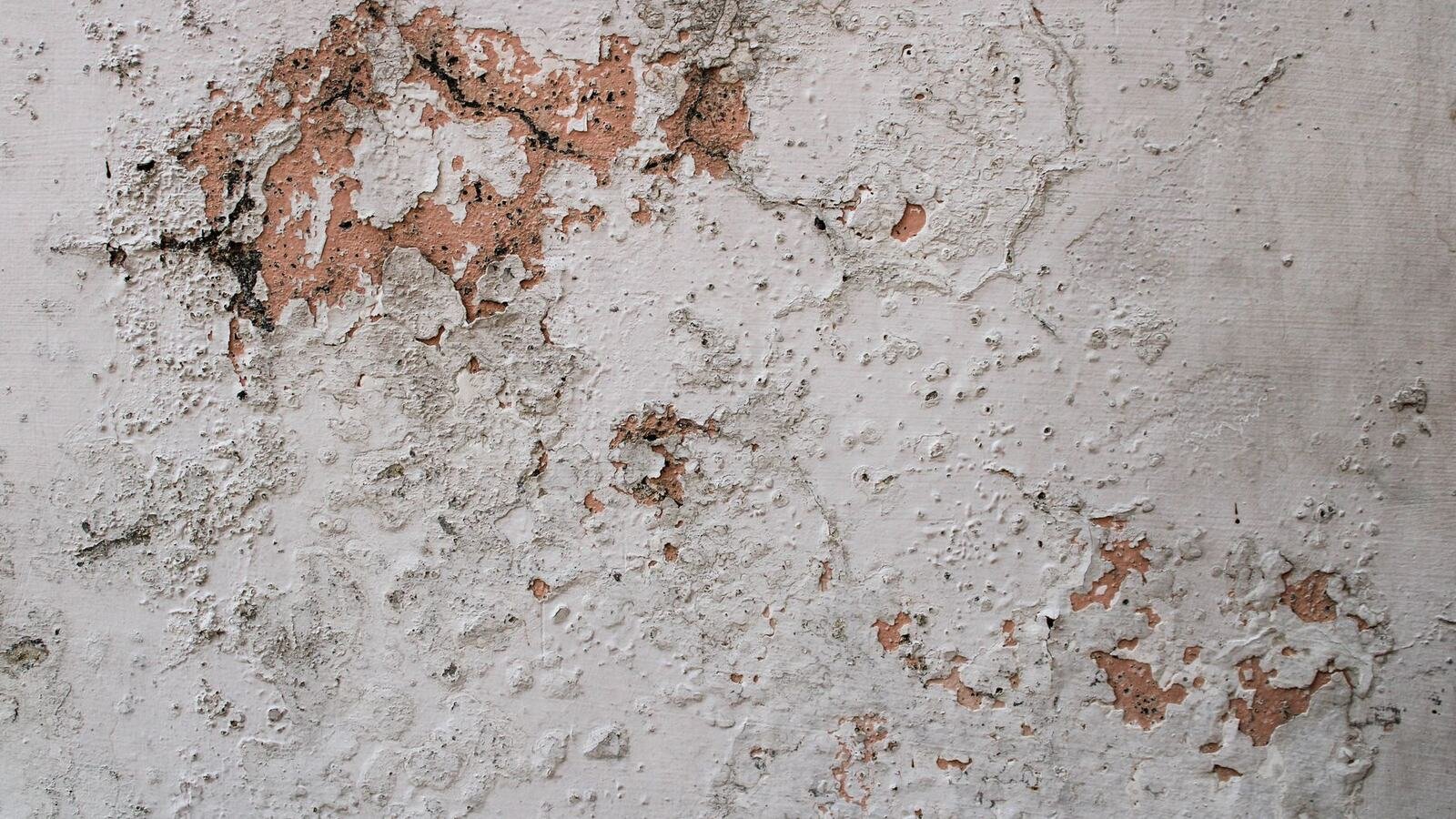
Damp in Barcelona flats: the four types
Painting over damp costs you money twice: the paint, and then the repair you should have done first. Everything depends on which of the four it is.
- 48 h
- Fixed written quote within 48 h
- 0 €
- Free site visit
- 5
- On this page
- ★ 5,0
- Google · 13
Diagnosis
How do you tell the four types apart?
Diagnose first, repair second: there are four kinds of damp and none of them share a fix. Condensation is corrected with ventilation and insulation at the cold spot, from €55/m² for an insulated dry lining. Penetrating damp from a roof, façade or party wall needs waterproofing from €95/m². Rising damp needs an injected chemical barrier and a breathable render. A leak means finding and replacing the run of pipe. Redecorating an 80 m² flat afterwards runs €1,400 to €2,400. The building work is typically one to five days — what actually sets the calendar is drying the wall, two to six weeks before any paint goes on. If the source is the roof, the façade or a communal stack, it is a comunidad cost funded by a derrama, not yours alone.
They look nearly identical on a wall and have almost nothing in common underneath. The two clues that separate them are where the mark appears and when it gets worse. Get those two answers and the diagnosis is usually obvious.
| Type | Where and when it shows | What actually fixes it | Cost frame | Who normally pays |
|---|---|---|---|---|
| Condensation | Cold corners, behind wardrobes, window reveals; worse in winter | Controlled ventilation plus insulation at the cold spot | insulated lining from €55/m² | The owner |
| Penetrating | One localised patch, worse in the days after rain | Waterproofing the roof, terrace, façade or party wall | €95/m², €130/m² insulated | Comunidad if the source is a common element |
| Rising | Tide line low on the wall, white salt deposits | Injected chemical barrier and sacrificial render | by linear metre of wall treated | Comunidad if foundations or a shared basement |
| A leak | Grows steadily, unrelated to the weather | Locate and replace the section of pipe or stack | stack section €800–€2,000 | The flat it comes from, or the comunidad if a common stack |
| Redecoration | Only once the wall reads dry | Plaster repair and paint — never before | €1,400–€2,400 for 80 m² | The owner |
Rising damp
Climbs from the floor up through the wall, typically to around a metre, with a fairly defined horizontal tide line. It often leaves white salt deposits as it dries. Found on ground floors, in basements and in converted commercial units with no barrier against the ground.
Penetrating damp
Comes in from outside through the façade, the roof or a terrace above. The stain sits in one specific place and gets worse shortly after rain rather than before it. On a party wall with a light well, suspect a failed rendering joint.
Condensation
Appears in corners, behind wardrobes and around window reveals. Worse in winter and worse when the flat is shut up. It does not come from outside at all: it is water vapour the household generates, condensing on the coldest surfaces available.
A leak
A localised stain that grows steadily with no relationship to rain or to the season. Usually a buried pipe or the flat above. If it appears on a ceiling and grows overnight, it is almost never anything else.
The common one
Why is condensation the one everybody misdiagnoses?
It is by far the most common damp problem in Barcelona flats and the most consistently treated wrongly, because it is attacked as though the water were coming in from outside. It is not. It is being generated inside and has nowhere to go.
Why it happens
- A household produces a surprising volume of water vapour: cooking, showers, drying laundry indoors, breathing
- Modern windows seal properly, so that vapour no longer escapes through gaps by itself
- It condenses on the coldest surface it can find: external corners, window lintels, roller shutter boxes
- With no ventilation the relative humidity climbs and mould follows within weeks
The renovation trap
Replacing windows without providing ventilation is the number one cause of mould appearing after a renovation. The flat used to ventilate through the draughts around the old frames. Those draughts were sealed, and nothing was put in their place. The windows are not defective — the plan was incomplete.
How it is actually solved
Controlled mechanical ventilation, insulation at the cold spots, and in specific cases dehumidification. Anti-mould paint on its own only delays the return, because it treats the surface rather than the cause.
Rising damp
What works on damp coming up from the ground?
Typical of ground floors in older Barcelona buildings and of commercial units converted into homes. It can be resolved, but not by waterproofing the inside face of the wall, which is what is usually attempted first.
What does not work
- Waterproof paint or render on the internal face: the moisture simply finds another route and emerges higher up
- Tiling over it: salts crystallise behind the tile and eventually push it off the wall
- Building a lined stud wall in front without addressing the source: mould grows inside the cavity where you cannot see it
What does work
- A chemical damp-proof course injected into the base of the wall to create a barrier
- A ventilated cavity at floor level in units with a floor slab against the ground
- Sacrificial macroporous render, which lets the wall breathe and pushes salt crystallisation into the render rather than the finish
- Fixing the actual source where there is one: a leaking communal drain or a paved courtyard draining towards the wall
Where the comunidad becomes involved
If the cause is a communal drain, a shared basement or the building’s own foundations, the cost is not yours alone. Get the diagnosis in writing from a technician and take it to the owners association, because a levy shared across the building is a very different figure to a repair funded by one flat.
If you are abroad
How do you diagnose damp in a flat you are not in?
Remote diagnosis is genuinely possible, because the two decisive clues — location and timing — are things a tenant, a neighbour or a cleaner can report accurately without any technical knowledge at all.
What to ask whoever is there
- How high up the wall does it reach, and is the top edge a straight line?
- Does it get worse in the days after heavy rain, or is it unrelated to weather?
- Is it worse in winter with the windows closed, or the same all year?
- Are there white powdery deposits, or black speckled mould?
- Is it in a corner or behind furniture, or in the open middle of a wall?
- A photograph of the whole wall, not a close-up — the extent tells you more than the texture
What to install in a flat you cannot visit
A wifi humidity sensor costs very little and turns an argument into data: sustained readings above roughly 65 per cent point firmly at condensation and ventilation. Pair it with an automatic leak-detection shut-off valve, which is the highest-value single fitting in any unattended property.
The order to work in
Diagnose, fix the cause, dry the wall out, then decorate. Skipping any of the first three means paying for the fourth twice. A technician visit to establish which of the four you have is the cheapest hour in the whole process.
Frequently asked
Common questions
Two questions decide it. Where does it appear — low on the wall with a tide line, at one point on an external wall, in a corner, or on a ceiling? And when does it worsen — after rain, in winter with windows closed, or steadily regardless of weather?
Condensation, by a wide margin. Water vapour generated inside the flat condenses on cold corners, lintels and shutter boxes because sealed modern windows leave it nowhere to escape. It is routinely misdiagnosed as water coming in from outside.
Because the old frames were ventilating the flat through their draughts. Sealing them without adding controlled ventilation traps the moisture from cooking and showering indoors, and it condenses on the coldest surfaces. It is the most common unintended consequence of a window upgrade.
No. It treats the surface and buys you some months. Unless the cause is fixed — ventilation for condensation, a barrier for rising damp, the actual defect for penetrating damp or a leak — the problem returns in the same place.
The owners association, funded by a levy shared across the building, if the source is a communal drain, the façade, the roof or the foundations. Get the diagnosis in writing from a technician before raising it, because the association will ask for evidence.

Next step
Want a figure for your own project?
Free site visit in Barcelona and the metropolitan area. Fixed written quote within 48 hours, no obligation.
More articles
Keep reading
Walk-in wardrobe
An undersized walk-in wardrobe is worse than a good fitted one: it takes metres off the bedroom without adding capacity. These are the numbers below which it stops making sense.
Piso diafano
Diafano is the most used word in Spanish property listings and the least understood by foreign buyers. It means free of obstacles — a space without internal partitions — and it can describe two very different things.
Pladur
Pladur appears in every Spanish renovation quote and confuses every foreign owner. It is simply a brand of plasterboard that became the generic word — and well executed, it beats brick partitions at almost everything.
Cost by flat size
Price per square metre is useful for orientation and misleading for decisions: several of the biggest line items cost roughly the same in a 70 m² flat as in a 120 m² one, and they are exactly what breaks the quick mental maths.
Other services
We also do
Clients
What clients say after their renovation
Rated 5.0 from 14 Google reviews. All real, from real projects.
★★★★★
“Doy un 10 la verdad con el servicio que me han prestado en una reforma de un piso en Barcelona capital, gente muy seria y responsable, gracias.”
Araks SahakyanJuly 2026
★★★★★
“Quedé encantada con la atención y la calidad del trabajo. Se nota que cuidan los detalles y cumplen con lo que prometen.”
Ana RiveraApril 2026
★★★★★
“Servicio muy profesional. Me explicaron todo con claridad y el trabajo quedó perfecto.”
Ana AlemanMarch 2026
★★★★★
“Si estas buscando profesionales responsables para hacer tu reforma, es el lugar indicado. Especializados en reformas integrales con la mejor atención personalizada. 100% recomendados.”
Daniel GarganoFebruary 2026
★★★★★
“Muy buen trabajo, ha realizado un trabajo muy profesional, ha cumplido en plazo y en calidad.”
Francisco PiñeirosAugust 2025
★★★★★
“Muy buenos profesionales, con excelente resultado.”
Esther DiezJune 2026
Want a figure for your own project?
Free site visit and a fixed written quote within 48 hours.
+34 615 78 93 41· Carrer de la Diputació, 189, Local 2 · 08011 Barcelona