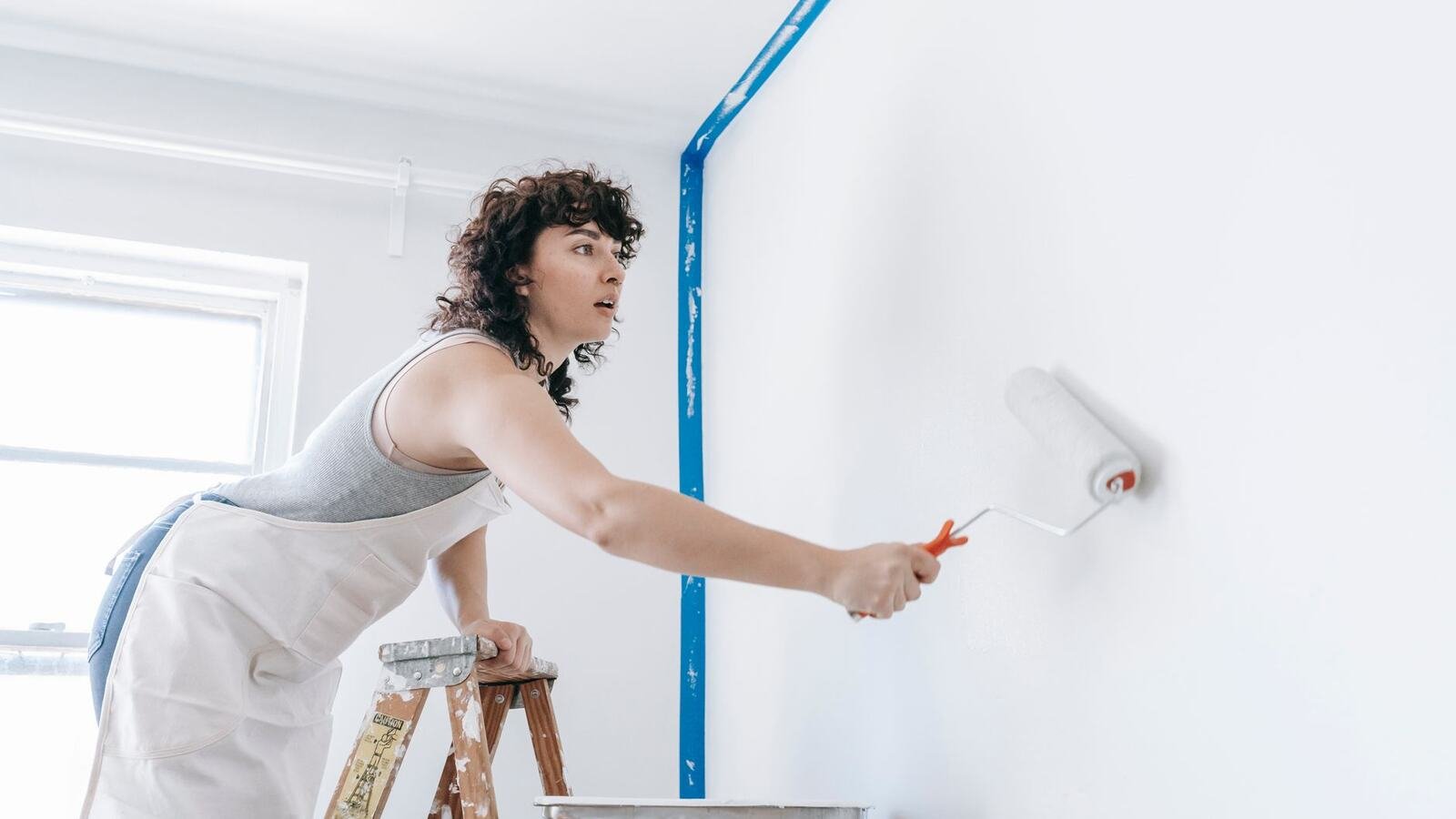
Removing gotelé and smoothing walls
If you have bought a flat in Spain and the walls look like porridge, that is gotelé. Removing it is the cosmetic job with the best value for money there is, and also the dirtiest.
- 48 h
- Fixed written quote within 48 h
- 0 €
- Free site visit
- 6
- On this page
- ★ 5,0
- Google · 13
Short answer
What gotele is and how it comes off
Gotele is a stippled paint texture rolled onto walls and ceilings in almost every Spanish flat built between roughly 1970 and 1995. There are three ways to remove it: scraping wet with a wide blade, sanding with a vacuum-extracting machine, or skimming straight over it with two coats of filler without removing it at all. Skimming over is the usual choice in an occupied flat because it creates far less dust, and it adds only a couple of millimetres to the wall. The choice depends on the relief: fine gotele is skimmed over, heavy stipple or thick plastic paint is better scraped first. It is priced per square metre of wall and ceiling, not floor: a 100 m² flat has roughly 250–300 m² to treat. Painting in Barcelona runs 9–14 € per m² of wall, and an 80 m² flat with preparation included sits between 1,400 and 2,400 €; smoothing is added on top of that base.
The figure is not genuinely fixed until the wall is bare, and that caveat is what separates a serious quote from a number given over the phone.
Methods
Scrape, sand or skim over
| Method | How it works | Dust | When it makes sense |
|---|---|---|---|
| Scraping wet | The wall is wetted and scraped with a wide blade | Very little, but heavy wet waste | Plastic gotele over plaster in good condition |
| Machine sanding | Sander with vacuum extraction connected | Fine and pervasive, gets everywhere | Empty, well-protected flat only |
| Skimming over | Two coats of filler with a light sand between | The lowest of the three | Fine relief and occupied flats: the default |
The ten-minute test
Scrape half a square metre in a discreet corner before choosing a method. Ten minutes shows the real thickness of the texture and the condition of the plaster underneath, and with that the quote stops being guesswork.
What is underneath
Why the gotele was there
Gotele was rarely a style choice. It was applied because it hides things, cheaply and quickly. Which means that removing it reveals what it was hiding.
What usually appears
- Shrinkage cracks in partitions and at wall-to-ceiling junctions
- Old plaster patches with different texture and tone
- Badly filled chases where electrical cables were buried
- Historic damp that left the plaster crumbling
- Corners with no bead, out of true or chipped
What it means for the quote
In a flat built before the nineties, budget the smoothing with a contingency for substrate repair. The surface that appears is rarely ready to paint, and repairing it is precisely the work the gotele was covering up.
The unexpected gain
A flat matt surface spreads light evenly, while stipple creates thousands of micro-shadows that darken a room. The change in how the flat feels is bigger than you would expect from work that is technically just painting.
Spanish specifics
What is different in a Spanish flat
Ceiling height changes the job
In a pre-war building in the Eixample, ceilings run close to three metres. Smoothing then needs a tower or trestles rather than a stepladder, which changes the rhythm of the job and how many days a room is out of use more than it changes the price per square metre.
Plaster mouldings are not skimmed
Period flats have cornices, ceiling roses and perimeter friezes in plaster. These are not passed over with filler: they are cleaned back by brush, piece by piece, and it is stripping work rather than painting. If the gotele was rolled over the moulding, recovering it is a separate line and must be stated in the quote.
Hydraulic tile floors
Many older flats keep their original hydraulic mosaic floor, hand-made cement tiles that cannot be bought again. Protection here is cardboard or blankets, not thin plastic: what scratches them is not the dust but the trestles and the tools.
Terrazzo and thin partitions
In flats from the sixties and seventies, partitions are single-leaf and very thin. Wet scraping softens the plaster more than you would expect and cracks multiply. In those cases skimming over is not the cheap way out; it is frequently the technically correct one.
The dust
The real problem with this job
Sanding dust is extremely fine and finds its way into closed wardrobes, inside appliances and into stored clothing. Anyone who has lived through an unprotected smoothing job remembers it for years.
What must be in the quote
- Floor-to-ceiling plastic with tape at every doorway and opening
- Floor protection with cardboard or blankets, not just thin plastic
- Sander with vacuum extraction, not dry hand sanding
- Sealing of ventilation grilles and air conditioning units
- Final clean included, vacuuming surfaces rather than sweeping
If someone is living there
Work zone by zone with sealed separation, starting with bedrooms. Empty the wardrobes in the room being worked on, because dust gets in regardless, and accept that the room is unusable for those days.
Doing it remotely
This is the ideal job for the gap between tenancies: an empty flat allows machine sanding, which is faster and gives a better finish, and removes any argument about protection. Ask for photos of the bare wall after the texture comes off — that is when the substrate repairs are visible and when the scope can still change.
When not to smooth
If a wall is damp, badly out of true, or backs onto the outside or a neighbour, a dry lining with insulation solves the finish and improves comfort as well. It costs more, but it fixes the underlying problem instead of covering it.
Frequently asked
Common questions
A stippled paint texture rolled onto walls and ceilings, near-universal in Spanish flats built between roughly 1970 and 1995. It was used because it hides imperfect plaster quickly and cheaply, which is also why removing it usually reveals repairs that need doing.
It depends on the relief. With fine texture, skimming over with two coats of filler gives the same result with far less dust and is the default in an occupied flat. With heavy stipple or thick plastic paint, scraping first avoids an excessive thickness of filler.
Roughly 250 to 300 square metres of wall and ceiling, which is what gets quoted. Calculating from floor area is the most common mistake and leaves the figure well short, especially in older buildings with high ceilings and long corridors.
Yes, working zone by zone with sealed separation and choosing skimming over machine sanding. Wardrobes in the room being worked on need emptying, and that room is out of use for the working and drying days.
They are not filled over. They are cleaned back by brush, piece by piece, which is stripping work. If gotele was rolled across a cornice or rose, recovering it is a separate line in the quote and is not covered by the price per square metre.

Next step
Want a figure for your own project?
Free site visit in Barcelona and the metropolitan area. Fixed written quote within 48 hours, no obligation.
More articles
Keep reading
Room dividers
Separating without closing is the most requested move in flat renovations. The right question is not which divider looks best, but what you actually need to separate: sight, sound or both.
Walk-in wardrobe
An undersized walk-in wardrobe is worse than a good fitted one: it takes metres off the bedroom without adding capacity. These are the numbers below which it stops making sense.
Piso diafano
Diafano is the most used word in Spanish property listings and the least understood by foreign buyers. It means free of obstacles — a space without internal partitions — and it can describe two very different things.
Pladur
Pladur appears in every Spanish renovation quote and confuses every foreign owner. It is simply a brand of plasterboard that became the generic word — and well executed, it beats brick partitions at almost everything.
Other services
We also do
Clients
What clients say after their renovation
Rated 5.0 from 14 Google reviews. All real, from real projects.
★★★★★
“Doy un 10 la verdad con el servicio que me han prestado en una reforma de un piso en Barcelona capital, gente muy seria y responsable, gracias.”
Araks SahakyanJuly 2026
★★★★★
“Quedé encantada con la atención y la calidad del trabajo. Se nota que cuidan los detalles y cumplen con lo que prometen.”
Ana RiveraApril 2026
★★★★★
“Servicio muy profesional. Me explicaron todo con claridad y el trabajo quedó perfecto.”
Ana AlemanMarch 2026
★★★★★
“Si estas buscando profesionales responsables para hacer tu reforma, es el lugar indicado. Especializados en reformas integrales con la mejor atención personalizada. 100% recomendados.”
Daniel GarganoFebruary 2026
★★★★★
“Muy buen trabajo, ha realizado un trabajo muy profesional, ha cumplido en plazo y en calidad.”
Francisco PiñeirosAugust 2025
★★★★★
“Muy buenos profesionales, con excelente resultado.”
Esther DiezJune 2026
Want a figure for your own project?
Free site visit and a fixed written quote within 48 hours.
+34 615 78 93 41· Carrer de la Diputació, 189, Local 2 · 08011 Barcelona