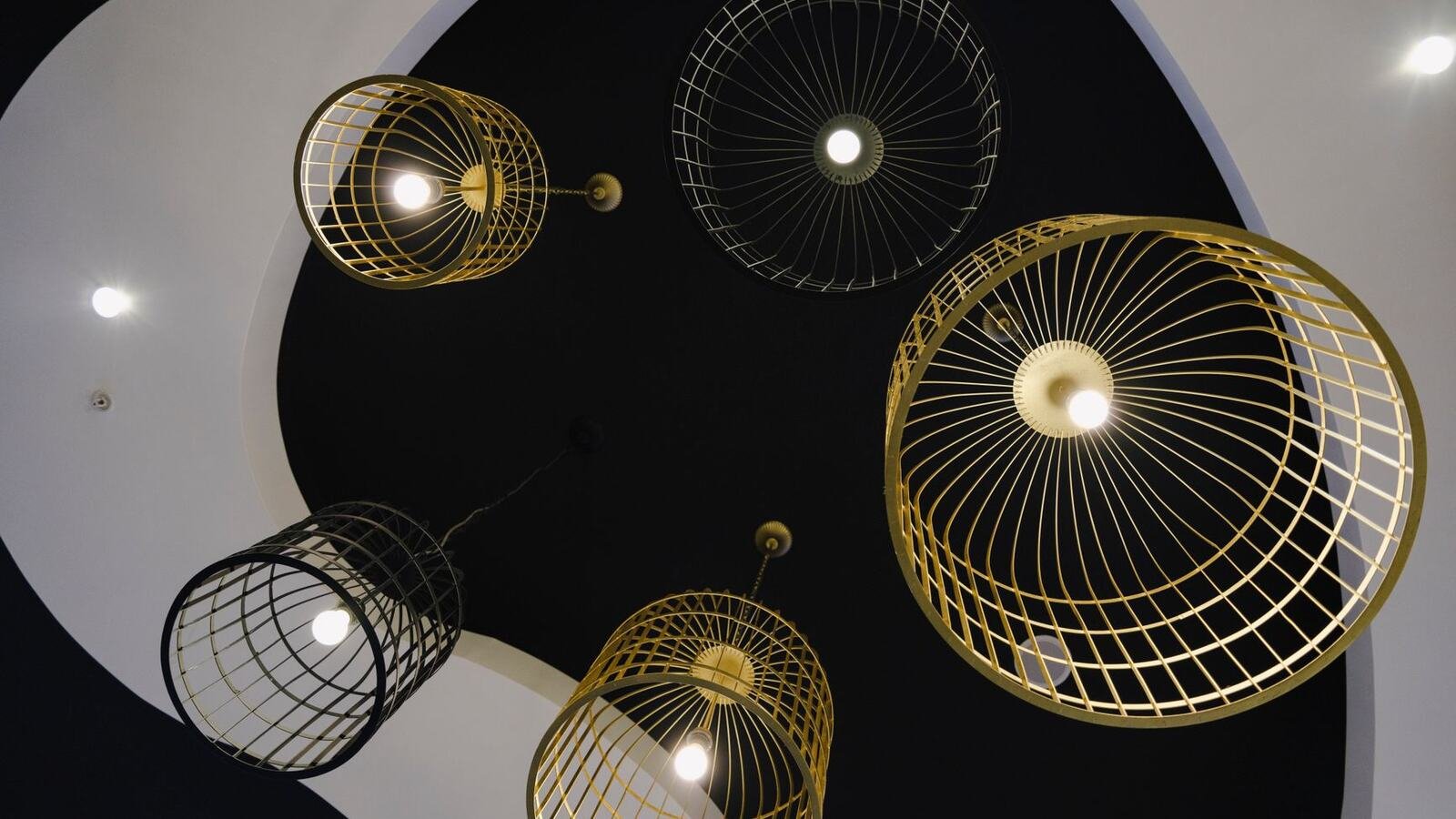
Indirect LED cove lighting in a Spanish flat
Walk into a well-renovated Barcelona flat at dusk and the light seems to come from nowhere. That is a foseado — and it is decided before the ceiling closes, not after.
- 48 h
- Fixed written quote within 48 h
- 0 €
- Free site visit
- 5
- On this page
- ★ 5,0
- Google · 13
Short answer
What is a foseado and what does it cost?
A foseado is a recessed channel built into a plasterboard false ceiling that hides an LED strip: light bounces off the ceiling or wall and fills the room with no visible source. It is built during the works, while the ceiling is open, and adds two or three days to the plasterboard phase. In the budget it lives in two lines: the plasterboard carpentry of the channel and the electrics — each new lighting point runs €30–60, and a cove needs at least one circuit of its own. Adding it after the flat is finished means rebuilding the ceiling, which is why it belongs on the ceiling plan, not on a wish list.
Spanish renovations resolve lighting inside the false ceiling: ducted air conditioning, recessed spots and the cove all share the same plenum, which is why the cove is drawn together with the electrical plan.
What it does well
- Glare-free ambient light — the layer you actually use most evenings
- Hiding the persiana box: the roller-shutter housing above almost every Spanish window
- Zoning an open-plan room without building a single partition
- Making the ceiling read higher, because the lit edge separates ceiling from wall
What it does not do
It is not task lighting and does not replace directed points: indirect light is one layer of the plan, not the whole installation.
Types
Which cove fits which room
| Type | How it works | Where it makes sense |
|---|---|---|
| Perimeter cove | Continuous channel at the ceiling edge, light washes up | Regular rooms without period cornices, uniform ambient light |
| Central tray | Recessed rectangle in the middle, light exits the rim | Open-plan zoning — and period flats where the cornice must not be touched |
| Curtain cove | Channel at the window front hiding rail and persiana box | Floor-to-ceiling curtains; the most useful and least showy of all |
| Wall wash line | Horizontal slot grazing the wall up or down | Long hallways, bedheads, textured or panelled walls |
The perimeter cove
The most requested: a channel 15–25 cm wide dropping 8–12 cm below the main plane, with the strip mounted on the side wall of the channel so light exits up and out rather than glowing at the bottom of a slot.
The tray and the curtain cove
The tray inverts the logic — light exits the rim of a central rectangle and the perimeter stays untouched. The curtain cove earns its keep in Spain: it swallows the persiana box, hides the curtain rail and washes the fabric top to bottom.
Period buildings
What changes in an older Spanish building
Three-metre ceilings are an asset
An Eixample-type flat with 3 m ceilings absorbs a 12 cm drop without anyone noticing — you can lower only the perimeter, or float a central tray that touches no wall. In a 1980s flat at 2.50 m the cove stays at the perimeter or a short run: every centimetre lost is felt.
Original cornices are not cut
A classic perimeter cove and a period cornice occupy exactly the same place. If the moulding has value, the answer is to invert the design: a central tray leaves the perimeter intact and, done well, grazes the cornice itself with light — the most respectful solution is also the most striking one.
The original ceiling is not flat
Under a Catalan vault or timber-and-plaster ceiling, grazing light exposes every ripple of century-old plaster. The new false ceiling provides the flat plane indirect light needs; sticking a strip straight onto original plaster is the fastest way to display a hundred years of irregularity.
One circuit, decided on paper
The cove must switch on alone or it loses half its point. That is one more circuit in the consumer unit and a five-minute decision on the plan.
Remote owners
Specifying and checking it from abroad
The strip is where cheap projects fail
Most disappointing coves fail on the strip, not the plasterboard: low LED density shows as a row of dots on the ceiling, colour temperature mismatched with the spots, CRI below 80 that deadens wood and fabric. Specify it in writing: COB or high-density strip, 2,700–3,000 K warm white, CRI 90+, and the same white as every other light in the room.
The driver must stay reachable
The power supply is the first component to fail. If it is plastered in, the ceiling gets opened again — ask where the driver sits and expect an answer naming an access point: inside the channel, a registro hatch, or above a wardrobe.
Two photos before the ceiling closes
- The open channel with the strip powered on — dots, gaps and colour are visible instantly, and fixable in an hour at this stage
- The ceiling plan marking the cove’s own circuit and the driver’s access point
- A finish note: a lit ceiling needs a higher skimming grade than standard, because grazing light marks every joint
- If ducted air conditioning shares the ceiling, the routing drawn — both live in the same 25–35 cm strip
An honest limit
Indirect light complements a lighting plan; it does not rescue one.
Frequently asked
Common questions
The Spanish term for a recessed cove: a channel built into the plasterboard false ceiling housing a hidden LED strip, so light bounces off the ceiling or wall with no visible source. Used for ambient light, zoning and hiding persiana boxes or curtain rails.
Around 10–15 cm in the strip where the channel runs; the rest of the ceiling can sit higher. In a period flat with 3 m ceilings it is imperceptible; at 2.50 m keep it to the perimeter or a short run.
Not comfortably: it is plasterboard carpentry and means rebuilding and repainting the ceiling. Surface-mounted aluminium profiles are the light-works alternative — a similar effect, visibly an added element. In a full renovation it should simply be on the ceiling plan from day one.
Low-density strip and too little distance between strip and lit surface. Specify a COB or high-density strip and at least 8–10 cm of throw inside the channel, with the strip on the side wall of the channel rather than its floor.
Warm white of 2,700–3,000 K, CRI 90 or above, a dedicated circuit, an accessible driver — and one photo of the strip lit inside the open channel before the ceiling is closed and painted. That photo is the whole quality control.

Next step
Want a figure for your own project?
Free site visit in Barcelona and the metropolitan area. Fixed written quote within 48 hours, no obligation.
More articles
Keep reading
Lighting
Lighting transforms a home more than any finish does, and it is the thing owners most often regret not having thought about while there was still time to change it.
Tourist licence
The right question is not how to renovate the flat. It is whether the flat can legally be used that way at all — and in Barcelona the answer is usually no.
Staying during works
Staying put saves the cost of temporary accommodation, and it lengthens the job and raises the price of the work itself. Here are the real numbers on both sides.
Finding damp
Painting over a damp patch solves nothing: it comes back within six months. The first job is establishing where the water is actually coming from.
Other services
We also do
Clients
What clients say after their renovation
Rated 5.0 from 14 Google reviews. All real, from real projects.
★★★★★
“Doy un 10 la verdad con el servicio que me han prestado en una reforma de un piso en Barcelona capital, gente muy seria y responsable, gracias.”
Araks SahakyanJuly 2026
★★★★★
“Quedé encantada con la atención y la calidad del trabajo. Se nota que cuidan los detalles y cumplen con lo que prometen.”
Ana RiveraApril 2026
★★★★★
“Servicio muy profesional. Me explicaron todo con claridad y el trabajo quedó perfecto.”
Ana AlemanMarch 2026
★★★★★
“Si estas buscando profesionales responsables para hacer tu reforma, es el lugar indicado. Especializados en reformas integrales con la mejor atención personalizada. 100% recomendados.”
Daniel GarganoFebruary 2026
★★★★★
“Muy buen trabajo, ha realizado un trabajo muy profesional, ha cumplido en plazo y en calidad.”
Francisco PiñeirosAugust 2025
★★★★★
“Muy buenos profesionales, con excelente resultado.”
Esther DiezJune 2026
Want a figure for your own project?
Free site visit and a fixed written quote within 48 hours.
+34 615 78 93 41· Carrer de la Diputació, 189, Local 2 · 08011 Barcelona